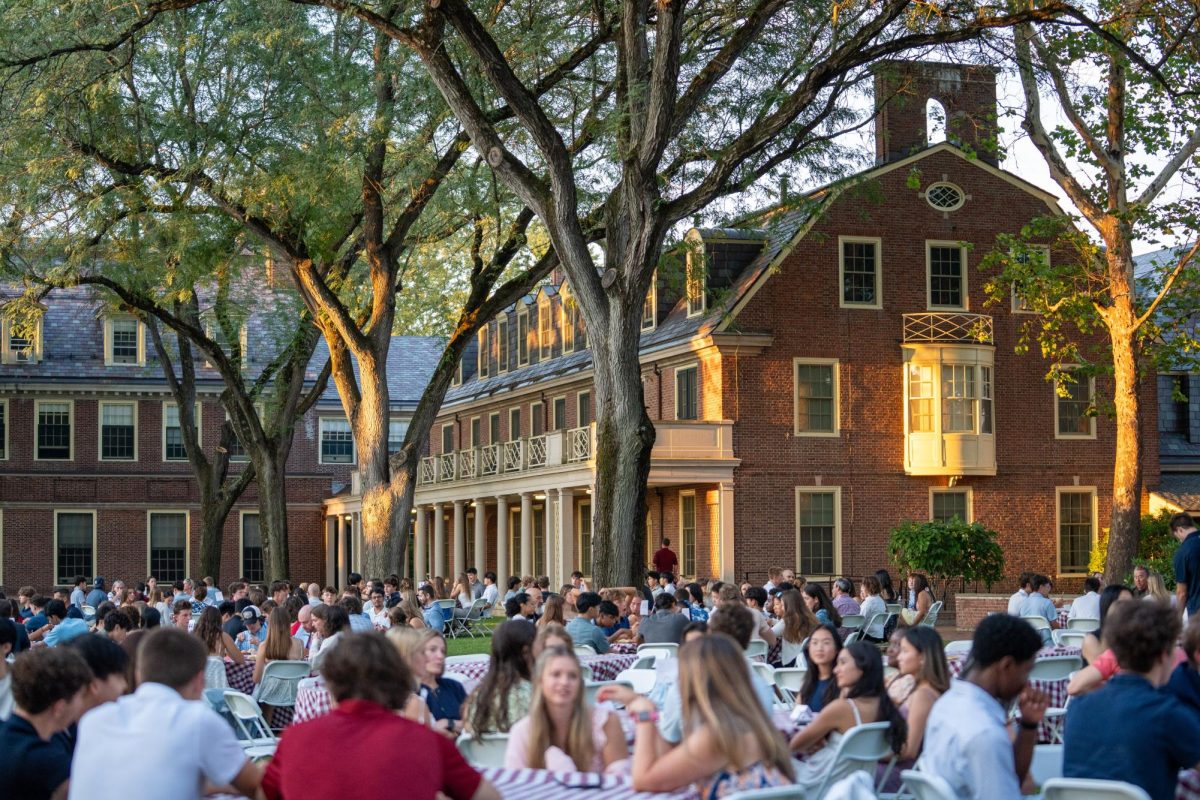
On Thursday, September 11, Loomis Chaffee’s first all-school community dinner was held. With around 800 students and faculty, the Grubbs Quad was bustling with energy.
Numerous contributors, including Jody Soja, Head of School; Chris Howes, Dean of Students; Hannah Hayes, Executive Assistant to the Head of School; the class deans; and the Student Council members, all helped to make this event come alive.
“We wanted to really just have an opportunity for all of us to connect and spend time with each other and have an opportunity to build relationships [and a community together.]” Mr. Howes said.
The deans wanted to demonstrate the importance of moments where we ground ourselves and connect face-to-face, free from electronics, especially within the whole community. Dr. Roland Davis, director of the Center for Inclusive Excellence & Belonging, added how the community dinner further fostered inclusivity and a sense of belonging to both students and the faculty members, ensuring that everybody realizes that they are a part of the Loomis community.
“There was a lot of [positive buzz] during the dinner. Being able to come together and sit at a table with people that you might not know all that well and get to know them, [especially] for our new students, was grounding and helped them see themselves as a part of our community,” explained Dr. Davis. “By being in an event like this, our day students who sometimes might not feel [like] a part of things don’t have to go home at the end of the day and feel like you’re missing [out on] something.”
Acknowledging these new traditions, students shared their experiences regarding these unique events. “[Community dinner] allowed me to branch out more. We had interesting conversations and learned a lot about other people’s opinions and their personalities. I think this event made a change in opening myself up to meeting new people and to the community,” said Katherine Geoghan ’27.
On the contrary, Mr. Howes wishes to aim higher, feeling that there were areas that could be improved. He noted, “we definitely would have more buffet tables and include different choices of activities so that if people run out of things to talk about, there’s other things that they could do.”